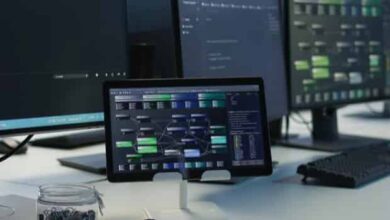
Ever wondered why your server crashes or your app slows down? A reliable system monitor could be the game-changer you need. It’s not just about tracking CPU usage—it’s about gaining real-time insights to prevent disasters before they happen.



What Is a System Monitor and Why It Matters

A system monitor is a software tool or hardware device designed to continuously observe and analyze the performance, health, and availability of computer systems, networks, and applications. In today’s digital-first world, where uptime equals revenue, having a robust system monitor in place is no longer optional—it’s essential.
Core Functions of a System Monitor
At its heart, a system monitor performs several critical functions that keep IT infrastructure running smoothly. These include tracking resource usage (CPU, memory, disk, and network), detecting anomalies, sending alerts, and generating performance reports. By doing so, it enables IT teams to act proactively rather than reactively.
- Real-time performance tracking
- Automated alerting for threshold breaches
- Historical data logging for trend analysis
According to Red Hat, system monitoring is foundational for maintaining service level agreements (SLAs) and ensuring business continuity.
Types of System Monitoring
System monitors come in various forms, each tailored to specific environments and needs. The most common types include host-based monitoring (focused on individual servers), network monitoring (tracking data flow and connectivity), application performance monitoring (APM), and cloud monitoring for distributed environments.
- Host-based: Monitors individual machines
- Network-based: Tracks bandwidth, latency, and packet loss
- Cloud-based: Scales across hybrid and multi-cloud infrastructures
“Monitoring is not about collecting data—it’s about making data actionable.” — DevOps Research and Assessment (DORA)
Key Metrics Tracked by a System Monitor
To truly understand system health, a system monitor collects and analyzes a wide array of performance indicators. These metrics provide a comprehensive view of system behavior, helping administrators identify bottlenecks, predict failures, and optimize resource allocation.
CPU and Memory Utilization
CPU usage is one of the most fundamental metrics tracked by any system monitor. High CPU utilization over extended periods can indicate inefficient code, excessive load, or even malware. Similarly, memory (RAM) usage is critical—running out of memory can cause applications to crash or systems to swap excessively, degrading performance.
- Monitor CPU load averages (1, 5, and 15-minute intervals)
- Track memory usage vs. available capacity
- Identify memory leaks in long-running processes
Tools like htop and Nagios provide real-time visibility into these metrics, allowing for immediate troubleshooting.
Disk I/O and Storage Health
Disk performance is often a silent bottleneck. A system monitor tracks read/write speeds, I/O wait times, and disk space utilization. Slow disk I/O can severely impact database performance and application responsiveness.
- Monitor disk queue length and latency
- Alert on low disk space (e.g., below 10%)
- Track SMART data for predictive hardware failure
For enterprise environments, integrating storage health into your system monitor can prevent data loss and downtime. As noted by Zabbix documentation, disk I/O metrics are crucial for capacity planning.
Network Performance and Latency
Network monitoring is a core component of any comprehensive system monitor. It tracks bandwidth usage, packet loss, jitter, and latency—key indicators of network health. Poor network performance can mimic application issues, making it essential to isolate the root cause.
- Monitor bandwidth consumption per interface
- Track round-trip time (RTT) for critical services
- Detect unusual traffic patterns (possible DDoS or breaches)
Tools like Wireshark and PRTG integrate with system monitors to provide deep packet inspection when needed.
Top 7 System Monitor Tools in 2024
Choosing the right system monitor can make or break your IT operations. Below is a curated list of the seven most powerful and widely used system monitoring tools, each offering unique strengths for different environments.
1. Nagios XI
Nagios XI is one of the most established names in system monitoring. Known for its flexibility and extensive plugin ecosystem, it supports monitoring of servers, applications, services, and network protocols.
- Highly customizable with over 5,000 plugins
- Supports both agent-based and agentless monitoring
- Enterprise-grade alerting and reporting
Despite its steep learning curve, Nagios remains a favorite among system administrators. Learn more at nagios.com.
2. Zabbix
Zabbix is an open-source system monitor that offers real-time monitoring, distributed monitoring, and cloud integration. It’s particularly strong in large-scale environments due to its scalability.
- Auto-discovery of network devices
- Built-in visualization and dashboard tools
- Supports SNMP, IPMI, JMX, and custom scripts
Zabbix is ideal for organizations that need enterprise features without the enterprise price tag. Visit zabbix.com for downloads and documentation.
3. Datadog
Datadog is a cloud-based system monitor designed for modern DevOps teams. It excels in monitoring hybrid and multi-cloud environments, offering deep integration with AWS, Azure, and Google Cloud.
- Real-time dashboards with AI-powered anomaly detection
- Log management and APM in a single platform
- Extensive API for automation and CI/CD pipelines
Datadog’s strength lies in its ease of use and rich ecosystem. It’s a top choice for SaaS companies and startups scaling rapidly. Explore it at datadoghq.com.
4. Prometheus + Grafana
This open-source duo has become the de facto standard for monitoring containerized environments, especially Kubernetes. Prometheus collects metrics, while Grafana provides stunning visualizations.
- Pull-based monitoring model with time-series database
- Powerful query language (PromQL)
- Highly extensible with exporters for almost any service
While it requires more setup than commercial tools, the flexibility and performance are unmatched. Get started at prometheus.io and grafana.com.
5. PRTG Network Monitor
PRTG is a Windows-based system monitor that offers a user-friendly interface and sensor-based monitoring. Each sensor (e.g., CPU, ping, HTTP) monitors one aspect of your IT environment.
- Over 200 pre-configured sensor types
- Auto-discovery and mapping of network devices
- Free version available for up to 100 sensors
PRTG is ideal for small to medium businesses that need a plug-and-play solution. Learn more at paessler.com.
6. SolarWinds Server & Application Monitor (SAM)
SolarWinds SAM is a comprehensive system monitor that supports deep application performance tracking alongside infrastructure monitoring.
- Pre-built templates for popular applications (SQL, Exchange, etc.)
- Root cause analysis with dependency mapping
- Integration with Orion platform for unified visibility
While it has faced security scrutiny in the past, SolarWinds remains a powerful tool when properly secured. Visit solarwinds.com for details.
7. New Relic
New Relic is a full-stack observability platform that combines system monitoring, APM, infrastructure monitoring, and browser monitoring.
- Real-time insights with AI-driven alerts
- Supports distributed tracing for microservices
- Free tier with generous limits
New Relic is particularly strong for development teams practicing continuous delivery. Check it out at newrelic.com.
How to Choose the Right System Monitor for Your Needs
With so many options available, selecting the right system monitor can be overwhelming. The key is to align the tool’s capabilities with your organization’s size, infrastructure, and goals.
Assess Your Infrastructure Complexity
Start by evaluating your environment. Are you running on-premises servers, a hybrid setup, or fully in the cloud? Do you use containers or virtual machines? A simple setup might only need PRTG or Nagios, while a Kubernetes cluster demands Prometheus or Datadog.
- On-premises: Zabbix, Nagios, PRTG
- Cloud-native: Datadog, New Relic, Prometheus
- Hybrid: SolarWinds, Datadog, Zabbix
Matching your infrastructure to the right tool ensures scalability and reduces integration headaches.
Consider Scalability and Total Cost of Ownership
Some tools, like Nagios and Zabbix, are free but require significant time and expertise to maintain. Others, like Datadog and New Relic, are subscription-based but offer managed services and faster deployment.
- Open-source: Lower upfront cost, higher operational cost
- SaaS: Predictable pricing, less maintenance, but ongoing fees
- Enterprise licenses: High cost but include support and SLAs
Always calculate the total cost of ownership (TCO), including training, integration, and potential downtime.
Evaluate Integration and Alerting Capabilities
A system monitor is only as good as its ability to integrate with your existing tools. Look for support for Slack, email, PagerDuty, and ITSM platforms like ServiceNow. Customizable alerting rules and escalation policies are also critical.
- Ensure API access for automation
- Test alert fatigue—too many false positives can lead to ignored warnings
- Verify support for webhooks and incident management tools
As highlighted by IT Revolution, effective alerting is a cornerstone of DevOps success.
Implementing a System Monitor: Best Practices
Deploying a system monitor isn’t just about installing software—it’s about establishing a monitoring culture. Follow these best practices to ensure your system monitor delivers maximum value.
Define Clear Monitoring Objectives
Before installation, define what you want to monitor and why. Are you focused on uptime, performance, security, or compliance? Clear objectives help prioritize which metrics to track and how to configure alerts.
- Identify critical services and set SLAs
- Map dependencies between systems
- Establish baseline performance metrics
Without clear goals, monitoring can become noisy and ineffective.
Start Small and Iterate
Begin with monitoring a few critical servers or applications. Once you’ve fine-tuned alerts and dashboards, gradually expand coverage. This phased approach reduces complexity and allows your team to learn the tool.
- Monitor core infrastructure first (DNS, database, web servers)
- Use templates to standardize configurations
- Document monitoring policies and procedures
As Google’s SRE book emphasizes, gradual rollout minimizes risk.
Automate Where Possible
Manual monitoring doesn’t scale. Automate data collection, alerting, and even remediation using scripts or orchestration tools. For example, if disk space drops below 10%, trigger a cleanup script automatically.
- Use configuration management tools (Ansible, Puppet) to deploy agents
- Integrate with CI/CD pipelines for proactive monitoring
- Leverage AI/ML for anomaly detection and predictive alerts
“The goal of monitoring is not to replace humans, but to empower them with better information.” — Google SRE Team
Advanced Features of Modern System Monitors
Today’s system monitors go far beyond basic metric tracking. They offer intelligent features that transform raw data into actionable insights, enabling faster decision-making and improved system resilience.
AI-Powered Anomaly Detection
Modern tools like Datadog and New Relic use machine learning to detect unusual patterns in system behavior. Instead of relying on static thresholds, AI models learn normal behavior and flag deviations—reducing false positives and catching subtle issues early.
- Identifies performance degradation before it impacts users
- Adapts to seasonal traffic patterns (e.g., holiday spikes)
- Reduces alert fatigue by filtering noise
This proactive approach is revolutionizing how teams respond to incidents.
Distributed Tracing and Observability
In microservices architectures, a single user request can traverse dozens of services. Distributed tracing allows a system monitor to follow that request across services, identifying bottlenecks and failures in complex workflows.
- Visualizes request flow with trace diagrams
- Measures latency at each service hop
- Integrates with OpenTelemetry for vendor-neutral data collection
Tools like Jaeger and Zipkin, often integrated into system monitors, are essential for debugging modern applications.
Custom Dashboards and Reporting
A picture is worth a thousand metrics. Custom dashboards let teams visualize system health at a glance, while automated reports provide insights for management and compliance audits.
- Create role-specific dashboards (e.g., ops team vs. CTO)
- Schedule daily/weekly performance reports
- Export data for regulatory compliance (e.g., GDPR, HIPAA)
Grafana, in particular, has become the gold standard for dashboarding in the monitoring world.
Common Challenges and How to Overcome Them
Even the best system monitor can face challenges. Understanding these pitfalls and how to address them is crucial for long-term success.
Alert Fatigue and Noise
One of the biggest issues is alert fatigue—receiving too many alerts, many of which are false or low-priority. This can lead to teams ignoring critical warnings.
- Implement alert deduplication and grouping
- Use severity levels (Critical, Warning, Info)
- Set up escalation policies based on time and impact
According to a PagerDuty report, 54% of IT teams experience alert fatigue, reducing response effectiveness.
Data Overload and Storage Costs
Monitoring generates vast amounts of data. Storing and managing this data can become expensive and unwieldy.
- Implement data retention policies (e.g., keep raw data for 30 days, roll up after)
- Use tiered storage (hot for recent data, cold for archives)
- Compress and sample data where appropriate
Tools like Thanos and Cortex extend Prometheus to handle large-scale data efficiently.
Security and Access Control
A system monitor has access to sensitive system data, making it a potential target for attackers. Securing it is paramount.
- Enforce role-based access control (RBAC)
- Encrypt data in transit and at rest
- Regularly audit access logs and configurations
After the 2020 SolarWinds breach, the industry has placed greater emphasis on securing monitoring tools themselves.
Future Trends in System Monitoring
The field of system monitoring is evolving rapidly, driven by cloud computing, AI, and the rise of edge computing. Staying ahead of these trends ensures your monitoring strategy remains effective.
Shift-Left Monitoring
Monitoring is moving earlier into the development lifecycle. Developers now embed monitoring into code using instrumentation libraries and OpenTelemetry, enabling visibility from day one.
- Monitor application performance during testing
- Use synthetic transactions to simulate user behavior
- Integrate monitoring into CI/CD pipelines
This shift-left approach reduces production issues and accelerates troubleshooting.
Edge and IoT Monitoring
As more devices operate at the network edge (e.g., IoT sensors, retail kiosks), monitoring must extend beyond the data center.
- Lightweight agents for resource-constrained devices
- Fog computing to process data locally before sending to central systems
- Real-time monitoring for latency-sensitive applications
Tools like Telegraf and EdgeX Foundry are emerging to support this new frontier.
AI-Driven Predictive Maintenance
The future of system monitoring lies in prediction. AI models will not only detect anomalies but also predict hardware failures, performance degradation, and capacity shortages before they occur.
- Predict disk failure using SMART data and ML
- Forecast resource needs based on usage trends
- Automate scaling decisions in cloud environments
This proactive stance will minimize downtime and optimize costs.
What is a system monitor used for?
A system monitor is used to track the performance, availability, and health of IT systems, including servers, networks, and applications. It helps detect issues early, prevent downtime, and optimize resource usage through real-time alerts and historical analysis.
Which system monitor is best for beginners?
For beginners, PRTG Network Monitor or Zabbix are excellent choices due to their user-friendly interfaces and comprehensive documentation. PRTG offers a free version with up to 100 sensors, making it ideal for small environments.
Can a system monitor prevent server crashes?
While a system monitor cannot prevent crashes directly, it can detect warning signs—such as high CPU, memory exhaustion, or disk failure—and trigger alerts or automated responses to mitigate issues before they lead to failure.
Is open-source system monitoring reliable?
Yes, open-source system monitors like Zabbix, Nagios, and Prometheus are highly reliable and widely used in enterprise environments. They offer transparency, flexibility, and strong community support, though they may require more technical expertise to manage.
How does AI improve system monitoring?
AI improves system monitoring by enabling anomaly detection, reducing false alerts, and predicting future issues based on historical patterns. It allows systems to adapt to normal behavior and identify subtle deviations that might be missed by static thresholds.
Choosing the right system monitor is a strategic decision that impacts your entire IT operation. From basic server tracking to advanced AI-driven insights, these tools provide the visibility needed to maintain performance, ensure uptime, and drive innovation. Whether you’re a small business or a global enterprise, investing in a robust system monitor is not just smart—it’s essential for staying competitive in today’s digital landscape.
Recommended for you 👇
Further Reading: